

Perimenopause and menopause are not phases of a woman’s life to take lightly. It comes with so many possible health issues. And while many women do take the “grin and bear it” approach, this really shouldn’t be the norm. Particularly since there are things that can be done to help make this life transition easier and more manageable. So for all the ladies in the audience, this one is for you.
Perimenopause and menopause are both part of the same overall transition and indicate an end to women’s reproductive years. Perimenopause is defined as the natural transition leading to menopause. It can begin as early as the mid 30’s for some women and is marked by fluctuating hormones, irregular periods and symptoms like hot flashes, mood swings and sleep issues. The average duration of perimenopause is three to four years but can last up to 10 to 14 years.
Menopause officially occurs after a woman goes 12 consecutive months without a menstrual period. At this time in a women’s life, estrogen and other sex hormones steadily decrease. This causes the menses, or period, to stop and the woman is no longer capable of conceiving a baby. Most people are unaware that menopause is quite literally just 1 day, the 366th day of a woman going without a period. Everything following this day is considered post menopause. For many women, post menopause is when the sex hormones start to level out and many of the symptoms associated with perimenopause and menopause start to decrease and reach a new balance.
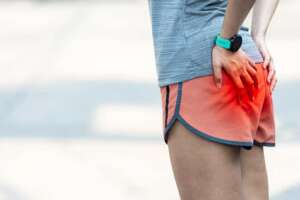
Many women start to experience joint pain during perimenopause, especially in the hips. To be fair, joint pain may have numerous causes, but through the perimenopause, menopause and post menopause phases, there are specific components that may be making it worse for women. During these life changes, gluteal tendinopathy becomes a phrase that many women start to become familiar with. The term tendinopathy applies to any painful tendon disorder and gluteal tendinopathy is one of the most common issues for women going through the life changes. Gluteal tendinopathy is the result of strain on the tendons that connect your gluteal muscles, aka your buttocks, to a point at the top of your femur, the upper leg bone. Gluteal tendinopathy can be caused by the overuse or underuse of the tendons, as well as standing or lying in positions that put added weight on the tendons themselves. So exercising without proper recovery time, sitting too long, especially with legs crossed or even standing with your weight being unbalanced between the hips can all contribute to gluteal tendinopathy.
During the perimenopause, menopause and post menopausal years, women experience a significant drop in estrogen levels, while cortisol levels spike. The irregularity of periods during perimenopause can also cause excessive bleeding and possibly anemia. The combination of lower estrogen, elevated cortisol levels and frequently decreased levels of iron in the blood all start to wreak havoc on the tendons. It’s almost as if there are termites eating away at the tendons and the collagen that they are made of, leading to weakness, pain, stiffness and chronic inflammation.
But the one component that is often overlooked is the micronutrient copper. When women become clinically anemic, meaning it is quantified by a blood test, what do most doctors tell them to do? Increase the intake of iron through food or supplementation. And while this may fix the clinical anemia, it rarely fixes the symptoms that many peri and post menopausal women deal with on a daily basis. This is where copper comes in.
Copper is considered an essential nutrient that is vital for numerous bodily tasks, including nervous system function, energy production, collagen formation and hemoglobin synthesis. The symptoms of inadequate copper: fatigue, weakness, cognitive problems, cold sensitivity and pale skin, are almost identical to the symptoms of iron deficiency anemia. That’s because both iron and copper deficient states can produce anemia resulting in poor oxygen carrying capacity, not to mention thyroid impairment.
Iron absorption is enhanced by copper because copper-containing enzymes like ceruloplasmin facilitate the release of iron from intestinal cells so that it can be taken up by the bloodstream. Copper is also responsible for regulating the amount of iron that enters the blood. If copper levels are too low, iron remains stored in tissues. This is what causes anemia, or lack of iron “in the blood.” Therefore, a deficiency of copper can frequently lead to an iron deficiency.
Likewise, decreasing estrogen levels also are a factor in clinical iron deficiency. Estrogen regulates how the body manages iron. One of its key roles is controlling hepcidin, a hormone produced by the liver that determines how much iron your body absorbs and releases from storage. When estrogen levels fall, hepcidin levels rise, which can block iron from being absorbed or released into the bloodstream. And even if you eat iron-rich foods, your body may not make full use of them. So it’s not uncommon for many women experience both low estrogen and iron deficiency as they transition toward menopause.
The last piece of the puzzle is testosterone. Declining testosterone levels play a role in menopausal joint pain too. And as testosterone decreases, so does muscle mass. As muscles weaken and struggle to do their job supporting the skeletal structure, joints can suffer, especially the larger joints that support the full weight of the body.
All of these components can create the perfect storm for women, leading to tendinopathy and pain. Gluteal tendinopathy is one of the most common symptoms because the tendons in the lower body are the largest and provide the most “food”. It can take several years for gluteal tendinopathy pain to appear while women are transitioning through perimenopause. But once it shows up, it usually hits with a vengeance and women experiencing this can have a lot of difficulty moving, sitting and sleeping.
Ladies, I can hear all of you now. Things seem bleak, but please don’t despair. While hormone replacement therapy (HRT) is frequently recommended for women going through all these phases, it isn’t the only answer. HRT can be very helpful for some women, but it shouldn’t be something you stay on for life. Even bioidentical HRT can cause problems. You have to remember that any type of pharmaceutical, including bioidentical ones, can have side effects and they are not from nature.
As you start to transition, making your health a priority is necessary. And it’s a lot of the advice that we all hear, but rarely incorporate…healthy eating, movement, stress reduction, etc.
1. Eat A Healthy Diet – To keep those tendons and joints happy, they need collagen. Food is the best way to give your body what it needs, but our soil and foods have become so depleted of minerals that sometimes supplementation is needed. Regardless, for the body to continue producing collagen, it needs nutrients like copper, Omega 3 fatty acids, protein, vitamin C, zinc, antioxidants and water. Foods that will provide these nutrients include eggs, nuts, seeds, mushrooms, citrus fruits, strawberries, kiwi, bell peppers, broccoli, whole grains, dark leafy greens, green tea, berries, walnuts, flax seeds and legumes. Also make sure to drink adequate amounts of water daily, even when it’s the dead of winter.
2. Manage Stress Levels – Chronic stress increases cortisol levels, which can inhibit collagen production. Yes, stress even impacts your tendons and pain levels. Practices like mindfulness, meditation, journaling and breathing exercises can help to mitigate this. Acupuncture treatments and massages are also great ways of managing your stress.
3. Exercise – While this one might seem a bit counterintuitive, it really isn’t. As the old saying goes, “If you don’t use it, you lose it”. This is particularly true of muscle mass and tendon flexibility. Weight bearing exercises and stretching are great ways to stimulate collagen production. And practices like yoga and pilates help to enhance flexibility. Doing regular tai chi or qigong can incorporate both collagen production and flexibility.
4. Utilize Alternative Treatments – Different treatment methods can be very beneficial for relieving pain, decreasing stress and improving flexibility. Regular acupuncture treatments and massages are a great place to start. Chiropractic care is another modality that can help. And to round it out, try some daily red light therapy with heat, which can help the body heal at a cellular level, while also assisting in the production of energy.
With all the changes that women face, it’s easy to understand why it can be overwhelming. But knowing is half the battle. Ladies, give yourself grace and find ways to help your mind and body adjust. And never forget that you are in control, even when it may seem like it’s hopeless.