

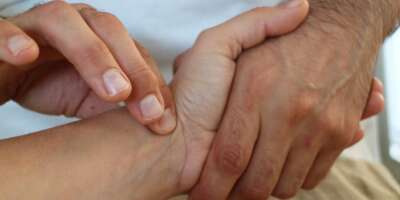
East Asian Medicine (EAM) has a long track record of helping people overcome all kinds of ailments, as well as keeping people healthy. Within EAM, pulse diagnosis is a time honored method that uses the principles of balancing qi, yin and yang. It helps in understanding your body’s unique rhythm and health needs. And while it may seem a little strange to those who are unfamiliar with the practice, it’s truly amazing what a practitioner can find out just from checking those pulses. So let’s dive a little deeper.
Pulse diagnosis dates back thousands of years to ancient China, with early references found in classical texts like the “Huangdi Neijing” (The Yellow Emperor’s Inner Canon) from around 300 BCE. This foundational text outlines East Asian Medicine principles and pulse diagnosis techniques.
The pulse, according to EAM, reflects the internal balance of the human body. Unlike Western medicine’s pulse assessment, which focuses primarily on heart rate, EAM pulse diagnosis explores a balance of variations. It looks into the speed, depth, quality and rhythm of the pulse. Pulse diagnosis allows for individualized treatments. By understanding a patient’s unique pulse patterns, practitioners can choose the most appropriate acupuncture points, herbal formulas and other therapies to restore balance and promote healing.
Practitioners examine the pulse at three radial artery positions on each wrist: the cun, guan and chi positions, each corresponding to specific organs and body regions. We assess the pulse at three depths – superficial, middle and deep – providing a detailed map of the body’s internal landscape.
As previously mentioned, the pulse reveals various qualities such as rate, rhythm, strength and texture, each offering insights into different aspects of health. The rate can indicate the body’s heat or cold conditions. The rhythm may reflect balance or disharmony in the body’s vital energies. The strength can provide clues about overall vitality or deficiencies. And the texture can reveal nuances related to the presence of excess fluids or tightness in energy flow.
By analyzing these pulse qualities, practitioners identify specific patterns of disharmony, which guide treatment plans. Here are some examples:
- Qi Deficiency: Signifying a lack of vital energy.
- Blood Deficiency: Suggesting insufficient blood supply.
- Qi Stagnation: Indicating blocked or constrained energy flow.
- Dampness or Phlegm: Pointing to excess fluids or mucus.
Each pattern helps practitioners understand the underlying causes of symptoms and formulate effective treatment strategies.
The pulse will shift and change, but generally any chronic or underlying issues will remain palpable in the pulse until things begin to shift internally within the organ systems and meridians. Patients often worry when they arrive at their appointment that they’ve just had coffee, walked quickly, climbed stairs, sat in traffic or done something else that might affect their pulse when it is taken. This is not a problem, because while it does change the pulse, usually only the rate or rhythm has changed and that change is easy to account for.
The rate and rhythm are only a small piece of what is looked at and the quality and shape of the pulse are equally important. Quality is a description of how the vessel feels under your fingers and how it feels when blood moves through it. Common qualities are wiry, which feels like a guitar string or slippery, which feels like bubbles moving in a water balloon. Shape is the diameter of the vessel. A vessel’s shape can be described by words like thin, full or hollow.
While pulse diagnosis can definitely be subjective, continued practice takes it to another level. And when combined with tongue diagnosis and a patient’s symptomology, a more complete picture can be viewed. This is why the intake for a new patient can take so much time. There are many internal systems that have to be reviewed and having more than one method to determine a diagnosis makes for a more comprehensive approach to treatments.
Pulse diagnosis is a cornerstone of traditional East Asian Medicine, offering a unique method for understanding the body’s internal landscape. With its rich historical roots and ability to provide detailed insights into the state of both qi and blood, pulse diagnosis remains indispensable.