

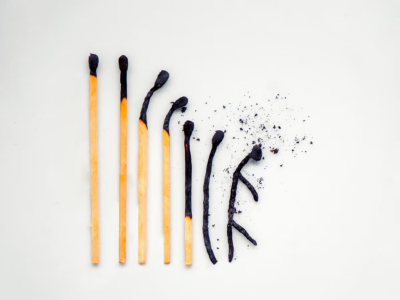
Do you ever feel like you’re running on empty, no matter how much sleep you get? You’re not alone. Burnout is more than just exhaustion – it’s a deep, lingering fatigue that affects your energy, mood, and even your motivation. For many people, juggling careers, family and personal responsibilities can lead to chronic stress and adrenal fatigue.
Burnout is not a personal failure, a lack of willpower or evidence that you need a better planner. It is a physiological and energetic state, one that shows up when stress, cortisol and qi fall out of rhythm with one another. In Western medicine, we often talk about adrenal strain and cortisol dysregulation. In East Asian Medicine (EAM), we talk about depletion of kidney qi and kidney yin. Different languages, same tired human beings, staring into their coffee wondering why rest no longer works.
Burnout happens when the body’s emergency systems stay switched on too long. Cortisol was designed for short bursts of danger, not for inbox alerts, family obligations and late-night scrolling. Qi, meanwhile, was meant to circulate, nourish and anchor us, not leak away under constant pressure. When both systems are pushed beyond their design, the result is exhaustion that sleep alone cannot fix.
Burnout has become so pervasive that research can now measure the cost and toll this syndrome takes on individuals and our health care system:
- “A 2018 Gallup study of nearly 7,500 full-time employees found that 23 percent of employees reported feeling burned out at work very often or always, while an additional 44 percent reported feeling burned out sometimes.”
- Job burnout costs an estimated $125 billion to $190 billion in health-care spending each year.
- Current research through the National Institute of Health “has attributed it to type 2 diabetes, coronary heart disease, gastrointestinal issues, high cholesterol and even death for those under the age of 4
In EAM, our kidneys (combined with our adrenal glands) are one of the most important organ systems. Together, they connect our brain to our instincts and intuition. The kidneys influence our hormonal rhythms and response to stress, shock, fear and trauma: think, the release of cortisol and your body’s Hypothalamic-Pituitary-Adrenal (HPA) axis (the pathway responsible for regulating your body’s sympathetic “fight or flight” response) .
The health of the kidneys are expressed through the brain (cognitive functioning), bones (their integrity), ears (hearing) and hair (quality) in EAM. After considering this, it makes sense why the more our kidney qi (energy) naturally declines with age that mild memory loss, osteoporosis, deafness, and hair thinning become more prominent. However, there are environmental and lifestyle factors that weaken the kidney qi prematurely too. Things like sleep deprivation, substance abuse, nutrient deficiencies (from poor appetite/diet) and long hours of physical / mental exertion without rest. Sound familiar? These are all side effects (or coping mechanisms) of burnout.
On an energetic level, the kidneys are the sacral root of our body’s life gate, as they withhold our reserves of inherited qi and vital essence (Jing). In this way, the kidneys can be thought of as our body’s deepest well…a reservoir that we too often take from but forget to replenish. When your kidney qi is abundant, you’ll have a healthy sense of self, direction and willpower to pursue your goals. You can take on the demands of the day with ease while making deliberate choices in what (and who) you give your energy to.
Here is a list of typical symptoms that correlate to burnout – feeling “burnt out” and exhausted, feeling numb or apathetic and having very little motivation, fogginess, trouble concentrating, poor memory, trouble recalling words, trouble falling and / or staying asleep, worrying chronically, overthinking, increased irritability and anger, substance dependency (caffeine, alcohol, recreational drugs), uncontrollable fear and hyper-vigilance related to past trauma, low back and knee pain, thyroid or hormonal imbalances, premature aging and hair loss. You might have one symptom or you might have several. Burnout looks different for everyone.
When you’re stressed, your body is stuck in fight-or-flight mode, constantly pumping out stress hormones like cortisol and adrenaline. Acupuncture activates the parasympathetic nervous system, bringing your body into a state of deep relaxation. Many people feel immediate relief after a session, like a weight has been lifted.
Acupuncture is a gentle, safe and effective therapy that promotes your body’s own physiological processes which become weakened or pathological from chronic stress, trapped emotions, as well as long-standing illnesses and injury. In other words: acupuncture reminds the body how to repair, regulate and heal itself again.
From an EAM viewpoint, acupuncture can help you recover from burnout by improving circulation of qi and blood to the kidneys, adrenals and other affected organ systems based on your clinician’s findings.
From a Western / scientific standpoint, it:
- Down-regulates your body’s stress response by shifting it from a “fight or flight” state to one that can “rest and digest.” This is why patients fall asleep during treatments, feel a deeper sense of calm, and report having better quality sleep sometimes in as little as one treatment.
- Increases body’s natural opiates, endorphins and enkephalins (feel-good hormones) to reduce pain.
- Reduce cortisol and increase serotonin to alleviate anxiety, depression, irritability and stress.
- Promotes blood flow to the brain to improve cognitive functioning, as well as the viscera, to regulate autonomic functions (reduce palpitations, improve nutrient absorption, appetite and energy levels and regulate bowel movements).
- Increases circulation to relax tight muscles and reduces joint stiffness
- Enhances the body’s immune system to decrease inflammation and quell inflammatory or auto-immune related conditions.
Burnout is your body’s way of saying, “I need a reset.” And acupuncture is a gentle yet powerful way to rebuild your energy, reduce stress and bring your body back into balance. If you’re ready to start feeling better, consider scheduling an appointment. Your energy is worth investing in.