

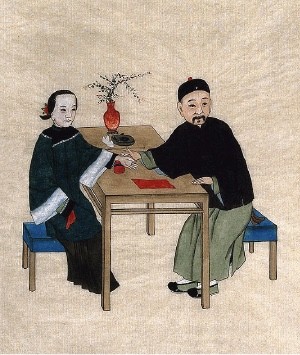
Pulse diagnosis is a pillar of both Western medicine and East Asian Medicine (EAM). But unlike western medicine, which only assesses pulse rate and blood pressure, EAM has approximately 28 different pulse types to work with. And each pulse can help direct an acupuncturist to the areas that need the most attention regarding your health.
In the EAM framework, the pulse is understood as a direct window into the body’s functional systems. The heart governs the blood and blood vessels, so pulse quality directly reflects heart function. The spleen produces blood and qi, so its vitality registers in the pulse’s overall strength and smoothness. The liver stores blood and ensures smooth qi flow, meaning that liver imbalances often manifest as a distinctively wiry, string-like pulse quality. Each organ leaves its signature in the pulse and this is why EAM pulse diagnosis is so important.
Before categorizing a pulse into one of the 28 classical qualities, a practitioner evaluates the pulse across several core dimensions. Modern standardization identifies measurable elements that help systematically describe any pulse quality:
- Rate: The number of beats per breath cycle. A normal pulse registers 4–5 beats per breath. A fast pulse indicates excess heat; a slow pulse suggests cold or deficiency.
- Depth: Whether the pulse is felt with light touch (superficial / floating) or requires firm pressure (deep / sunken). Superficial pulses typically signal external, acute conditions; deep pulses suggest internal or chronic imbalances.
- Strength: A forceful pulse reflects strong qi and blood; a weak, faint pulse points to deficiency or exhaustion.
- Width: A wide or large pulse suggests excess conditions; a thin or fine pulse indicates blood or fluid deficiency
- Rhythm: Whether beats are regular or irregular. Irregular pulses can reveal disruptions in organ function or emotional imbalances.
- Smoothness (quality of flow): Whether the pulse feels slippery and rolling or choppy and rough.
- Tension / Stiffness: Whether the vessel wall feels soft and pliable or taut and string-like under the fingertip.
After the aforementioned qualities are determined, the pulse is then broken down into further categories that help determine the overall diagnosis of the patient. The 28 classical pulse qualities are traditionally grouped into six major categories based on their primary characteristic. Understanding these groupings helps illustrate both the logic of the system and the range of information a skilled physician can extract from a single wrist examination.
Depth-Based Pulses – These pulses are primarily distinguished by how much pressure is needed to feel them clearly.
- Floating: Easily felt with light touch; disappears or weakens under heavy pressure. Often signals an external pathogenic invasion (such as a cold or flu) or, if weak and floating, indicates internal deficiency with yang rising outward.
- Sinking / Deep: Only perceptible with firm pressure. Associated with internal conditions — chronic issues, qi stagnation or cold lodged in the interior.
- Hidden: Even deeper than the sinking pulse; requires pressing all the way to the bone. Indicates extreme interior cold, severe pain or collapse of yang.
- Firm: Deep, long, large and wiry simultaneously. Associated with accumulation of cold, internal masses or excess conditions deep in the body.
Rate-based Pulses — These are among the most immediately informative for assessing the body’s thermal state.
- Slow: Fewer than 4 beats per breath (below approximately 60 bpm). Indicates cold conditions, yang deficiency or sluggish organ function.
- Rapid: More than 5 beats per breath (above approximately 90 bpm). Points to excess heat, fever, inflammatory conditions or heightened nervous system activity.
- Racing / Swift: An extremely fast pulse beyond the rapid category; often signifies extreme heat or severe yang excess.
- Moderate: Slightly slower than normal; can be a sign of dampness in the body or, in the absence of other pathological signs, a healthy, relaxed constitution.
Strength / Force Pulses — These pulse types reveal the fundamental adequacy or inadequacy of qi and blood throughout the body.
- Surging / Overflowing: Large, forceful, and waves strongly under the fingers — like a surging flood. Indicates extreme heat or excess yang.
- Fine / Thin / Thready: Very narrow but still perceptible; like a thin thread. Indicates blood deficiency, yin deficiency or exhaustion of body fluids.
- Vacuous / Empty: Large but soft and without force. Reflects overall qi and blood deficiency.
- Replete / Full: Forceful at all depths and in all positions. Associated with excess conditions — strong pathogens and robust resistance.
- Weak: Deep, thin, and without force. Signals qi and blood deficiency, particularly in the interior.
- Faint / Minute: Extremely thin and barely perceptible; seems to almost disappear. Indicates near-collapse of yang, qi or severe deficiency.
- Dissipated: Floating, large, but scattering and without root — erratic in both force and rhythm. Signifies exhaustion of qi.
- Soggy / Soft: Superficial, thin and soft. Associated with dampness combined with deficiency of qi or blood.
Rhythm-Based Pulses — Rhythm pulses tell practitioners about the regularity and continuity of organ qi, with irregular patterns often indicating more serious or complex conditions.
- Intermittent: Regular rhythm with pauses at fixed intervals. Often indicates exhaustion of organ qi, particularly heart qi and is considered a significant clinical finding.
- Bound / Knotted: Slow rhythm with irregular pauses. Associated with accumulation of cold, phlegm or qi and blood stagnation.
- Skipping / Hasty: Rapid rhythm with irregular pauses. Points to excess heat combined with stagnation of qi, blood, phlegm or food.
Flow / Texture Pulses — These qualities describe how blood moves through the vessel under the practitioner’s fingertips. This is one of the most clinically nuanced categories.
- Slippery / Rolling: Smooth and rolling, like beads gliding under the fingers. Commonly associated with phlegm accumulation, dampness, excess conditions or pregnancy.
- Choppy / Rough: Uneven, hesitating, like scraping a bamboo stalk. Indicates blood deficiency, blood stasis or obstruction of essence and fluids.
Vessel Tension and Shape Pulses —This group captures the physical character of the vessel wall itself and the pulse’s spatial dimensions.
- Wiry / String-like: Taut and straight, like pressing the string of a musical instrument. A hallmark of liver and gallbladder disharmony, as well as pain, stress or emotional tension.
- Tight: Like a stretched, twisted rope — taut but also bouncy. Indicates cold pathogens, pain or retention of food.
- Long: Extends beyond the normal three-finger span. Can be a sign of excess yang or of a strong constitution.
- Short: Does not reach all three finger positions. Indicates either qi deficiency (if weak) or qi stagnation (if relatively forceful).
- Hollow: Floating, large, and soft — firm on the edges but empty in the middle, like pressing on a hollow scallion stalk. Indicates sudden loss of blood or severe yin deficiency.
- Leather / Drumskin: Floating, large, wiry and hollow simultaneously — like pressing a tightly stretched drum skin. Associated with loss of essence, severe blood deficiency or exhaustion.
- Stirred / Moving: Short, slippery, and rapid — feeling like a bean rolling rapidly. Associated with pain, fright or shock.
Pulse diagnosis is not something that is learned quickly. Feeling the different qualities and positions can be very nuanced and requires practice. This is part of why EAM practitioners undergo a 4 year master’s degree instead of a 2 year program.
At Zen Penguin Wellness, pulse evaluation is something that is crucial for treating our patients. Without the pulse evaluation, there is no confirmation of the diagnosis and that can lead to the wrong treatment overall. In practice, pulses are rarely just one quality. The vast majority of patients present with a combination of qualities and it is the combination, together with the specific positions in which qualities are found, that paints the complete clinical picture.
EAM pulse diagnosis is one of medicine’s most remarkable diagnostic achievements — a system developed over two millennia that allows a practitioner to learn an extraordinary amount about the state of your internal organs, qi and blood from three fingers placed gently on your wrist. The 28 pulse qualities, organized across six positions and multiple depths, provide a multi-dimensional map of the body’s functional landscape. Far from being mystical or imprecise, this system is grounded in centuries of accumulated clinical observation, refined through and continues to be validated through modern research.