

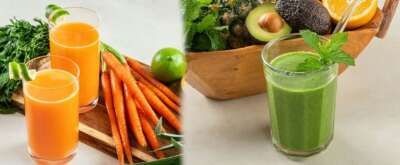
Nutrition is something everyone should be paying attention to if they want to lead a long healthy life free from chronic disease. But according to the Centers for Disease Control, only 12.3% of Americans meet fruit recommendations and only 10% meet vegetable recommendations. Long story short, the vast majority of Americans are in some sort of nutritional deficit every single day. And over time, those deficits add up.
In an effort to get more fruits and vegetables into the American diet, places like juice and smoothie bars have become very popular in recent years. Juicing and blending are both excellent ways to include more fruits and vegetables into your daily diet. Now for the million dollar question: which method is better for your health?
Some people assume blending and juicing refer to the same technique. In reality, though, they are two unique methods with their own advantages and disadvantages. Blending refers to the process of grinding up fruits, vegetables and other ingredients to create a semi-thick smoothie that’s loaded with beneficial vitamins and nutrients. Blended smoothies are a nutritious and equally delicious treat that can be consumed as a mid-day snack or even a meal replacement. You can add some tofu or a scoop of protein powder for even more nutrition.
Juicing, on the other hand, is a process in which the liquid juice is extracted from fruits and vegetables. The key difference between these two methods is that fibrous plant matter is separated and discarded in juicing. Juicers have a compartment that holds the fruits and vegetables. When the device is turned on, the ingredients are pressed to extract the liquid. The remaining fibrous material is then discarded (or used in a home composting system), and the unadulterated juice is consumed.
Because there’s no fiber in juiced beverages (only liquid), it digests faster and more easily. If you have a sensitive digestive system and frequently experience an upset stomach after consuming fiber, this may prove beneficial. With that said, drinking juiced beverages made largely with fruit juice can trigger blood sugar spikes. The fiber in smoothies acts to slow down the digestion process, resulting in a more gradual release of sugar and nutrients.
If you’re someone who prefers to make your own, here are some juicing / blending tips:
- Use caution when juicing and blending fruits, as it can greatly increase the sugar content of your beverages. Just a single banana, for instance, has about 14-15 grams of sugar.
- A “liquid” medium, such as coconut water, milk or yogurt (traditional or plant-based), is typically added to blended beverages to create a thinner consistency, but you don’t need to add a lot. You can also use water.
- Smoothies and juiced beverages are best when consumed 15-30 minutes after making them. This allows time for the mixture to reach a warmer temperature, which is better for gut health.
From an East Asian Medicine (EAM) perspective, juicing is less favorable, as it tends to introduce cold pathogens into the body. However, blending is more acceptable. Blending retains the fiber content of the fruits and vegetables, therefore retaining the thermodynamics of the food being blended. For instance, foods like watermelon, avocados, bananas, spinach, apples, celery and cucumbers all tend to be cool or cold in nature. Whereas foods such as blackberries, raspberries, dates, mustard leaves, cherries and ginger all tend to be warming in nature. According to EAM, one should choose foods based on their energetic properties and temperatures, as well as your own bodily needs. The thermodynamics of food is a core aspect of EAM nutrition and can greatly influence how the body functions.
Whether you prefer juicing or blending, both are easy ways to increase your daily fruit and vegetable intake. If you’re experimenting for the first time, start simple and work your way up. Pay attention to how your body responds and don’t be afraid to play around with the ingredients. There are lots of great combinations to be discovered.