

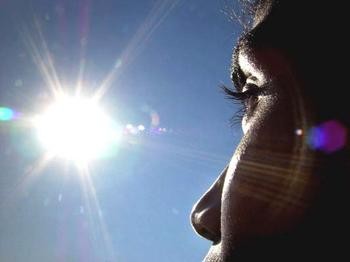
It’s probably fair to say that most people know not to look directly at the sun because it can damage your eyes. But there are also benefits to getting regular sun exposure at certain times of the day. So let’s look deeper into the connection between the sun, healthy vision and overall health.
UV radiation is divided into three distinct bands in order of decreasing wavelength and increasing energy: UVA (320-400 nm), UVB (290-320 nm) and UVC (200-290 nm). Different wavelengths and energy associated with UV subdivisions correspond to distinctly different effects on living tissue. Compared to UVB, UVA can penetrate deeper through the skin and is not filtered by window glass. It has been estimated that about 50% of exposure to UVA occurs in the shade. Blue light is part of the sunlight spectrum and in some ways it is even more dangerous due to our extensive additional exposure from mobile devices, computers, tablets and large LCD screens.
Exposure to light of specific wavelengths or intensity may induce severe damage to the retina. Ongoing exposure to the sun without the protection of 100% UVA/UVB sunglasses can cause or contribute to a range of eye conditions, including macular degeneration, cataracts and the onset of pterygium or pinguecula. While excessive radiation from sunlight, especially ultraviolet radiation (UVR) can damage the retina, the cornea and the lens.
The primary indicators that determine whether light from the sun (or other sources such as computer screens or LED light bulbs) will injure our eyes depends on three factors:
1. Intensity means how bright the light is. More intense light (mid-day light) causes more damage. But the light at sunrise and sunset, known as near-infrared (NIR) may be helpful. In fact some researchers report that, NIR might even precondition the skin from an evolutionary standpoint as exposure to early morning NIR wavelengths in sunlight may prepare the skin for upcoming mid-day harmful UVR.
2. Wavelength (energy). UVR (especially UVA, with the shortest wavelength and greatest energy) transmits more energy than visible light and high dose exposure to UVR causes direct cellular damage.
3. Age is an important factor. Children are especially vulnerable to UVR because of their larger pupils and more transparent cornea, aqueous liquid, lens and vitreous humour. Researchers report that up to 80% of a person’s lifetime exposure to UVR occurs before age 18.
The damage from sunlight can be thermal, causing corruption of protein structure in eye tissues (such as snow blindness), photomechanical (such as damage due to clinical use of laser light that pulses more rapidly than tissues can respond) or photochemical. Of the three types of photochemical damage, the two most common are oxidative and sensitization reactions and they are caused by solar energy and particularly UVR. This type of damage occurs when photoreceptor pigments, proteins, flavoproteins, melanin and lipofuscin in the retinal pigmented layer are excited by UVA energy.
Because of the potential for damage to the eyes, there are things you can and probably should do.
1. Wear 100% UVA/UVB sunglasses – (preferably polarized) when outside. The best lens color is amber which neutralizes blue light. Yellow, copper, brown and orange are better than green, grey, or blue. People who drive frequently find that brown and copper tinted lenses improve visual acuity and enhance recognition of red warning lights. When it is overcast or when hazy blue light is scattered, it decreases depth perception and visual acuity and contributes to eye fatigue. Yellow and amber lenses help neutralize the blue light and protect our eyes.
2. Avoid blue light from your computer – Using yellow tinted glasses when working on the computer or setting your computer display to a warm color helps protect against computer screen blue light.
3. No to LED lights – Researchers find that LED light causes retinal injury and oxidative damage, a loss of photoreceptors and cell death in the retina. So whenever possible, avoid LED lights and change out the bulbs in your house to incandescent bulbs.
But let’s not forget the benefits of sun exposure, especially in the early morning hours and late evening hours. Exposure to natural light triggers the production of dopamine in the retina. Without dopamine, the eyeball can elongate which can lead to blurry distance vision known as nearsightedness or myopia. Natural daylight exposure also helps alleviate eye strain caused by exposure to digital screens and artificial lighting. Sun exposure produces D3, which has been shown to prevent age-related macular degeneration. And lastly, bright morning light helps to improve color perception by stimulating light sensitive cells in the retina.
There are other health benefits to sun exposure too. One of the most well known is the circadian rhythm and sleep regulation. Early morning light enters the eyes and activates special cells that signal the brain’s master clock. This tells your body when to be alert and when to start the countdown for melatonin release in the evening. Early morning sunlight exposure can also help to balance hormones. Morning photons trigger energy that boosts serotonin for mood and cortisol for focus.
Lastly, it has to be mentioned that maintaining healthy vision requires a healthy diet and specific nutrients are particularly important.
1. Lutein – A powerful antioxidant, makes up the macular pigment in the retina and helps protect against damaging blue light. Lutein can be found in kale, spinach, Swiss chard, peas, corn, bell peppers, broccoli and pistachios.
2. Zeaxanthin – Like lutein, zeaxanthin protects the eye from blue light that causes damage from oxidative stress. Zeaxanthin can be found in spinach, kale, Swiss chard, bell peppers, corn, summer squash, oranges, mangoes, papaya and goji berries.
3. Vitamin C (buffered and ascorbated) – As an antioxidant, vitamin C scavenges free radicals in the body and protects tissues from oxidative stress. Vitamin C is found in bell peppers, kiwi, oranges, strawberries, lemons, limes and broccoli.
4. Astaxanthin – Astaxanthin protects against damage from light due to its antioxidant effect. Astaxanthin is found in microalgae, salmon, shrimp, crab and lobster.
As we transition into summer and more sunny days, make sure to take care of your eyes. Get outside in the morning or evening and soak up the healing rays of the sun in an effort to keep your vision and your body functioning at an optimal level. And if you’re already dealing with vision issues, consider giving acupuncture a chance. The results can be miraculous.