

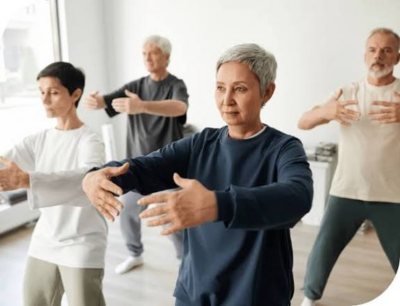
Qigong is a form of exercise developed in China thousands of years ago. It combines deep breathing, meditation and slow movements to help promote balance, flexibility, and overall good health and well-being. Qigong has become increasingly popular in recent years because of its numerous health benefits, including improving joint mobility, relieving stress and boosting the immune system.
The human immune system has evolved over thousands of years. The key players in the system are white blood cells that circulate through the blood and line the mucus membranes, tissues and digestive track. White blood cells are produced in the bone marrow and are part of the lymphatic system. These cells are your paramedics, soldiers, military intelligence and special forces. Whenever you get a cut, infection or virus they rush to the site and eliminate the invader. Specialized cells, called T-lymphocytes (T-cells), release antibodies (immunoglobins) that eliminate foreign invaders and micro toxins. These special forces record the information of every germ they have ever defeated so they can recognize them if they return. T-cells are developed in the thymus gland, which is located in the upper chest behind the sternum or breast bone.
East Asian Medicine views the immune system as Wei Qi or your body’s protective energy barrier. Wei Qi flows just beneath the skin, shielding you from pathogens. When it’s strong, you fend off colds, flu, and other illnesses with ease. When it’s weak, you’re more susceptible to sickness, fatigue and sluggish healing. East Asian Medicine (EAM) and qigong have successfully supported the immune system and treated illness for thousands of years. Rather than view pathogens as something we need to kill with antibiotics, Chinese medicine takes a preventative approach that supports the immune system to function at an optimal level.
One of the most common causes of Wei Qi deficiency is stress. When the body is under stress, it produces a hormone called cortisol, which can suppress the immune system. Chronic stress can lead to chronic inflammation, which can increase the risk of developing a range of diseases, including heart disease, diabetes, cancer and autoimmune disorders. Practicing qigong can help to reduce stress and promote relaxation, which can in turn help to boost the immune system. When the body is in a relaxed state, it produces fewer stress hormones, which can help to reduce inflammation and promote overall health.
Two recent studies have actually demonstrated the significant healing effects of qigong. The first study looked at the “cytotoxicity” of Natural Killer Cells (NK). NK cells are one of your body’s first lines of defense against pathogens, and part of how they kill those pathogens is with a load of cell-poison they carry, or “cytotoxin”. The more cytotoxins an NK cell carries, the deadlier it is to viruses and infections. The study measured the cytotoxicity of NK cells of participants before and after doing one hour of qigong, and found that it increased by 60% and stayed elevated for two hours following training.
Another study compared one group doing qigong with another group doing “sham qigong”, meaning the movements were made up and intentionally lacking qigong principles. This study showed that doing qigong just once was able to significantly increase white blood cell and lymphocyte counts. Whereas sham qigong had no effect. Interestingly, both sham qigong and actual qigong were able to increase monocyte count, indicating that movement in general is likely good for immune function.
So how does one perform qigong? Believe it or not, it starts with simple breathing exercises. The different movement forms of qigong are numerous and videos online are easy to follow. But let’s start with Lung Qigong Breathing. Lung Qigong Breathing is designed to enhance your immune system and support overall health. There are three essential techniques within this practice: abdominal breathing, 3-stage balloon filling breath and holding fire breath.
1. Abdominal Breathing – Abdominal breathing forms the foundation of the Lung Qigong Breathing technique. By consciously directing your breath into the lower abdomen, you engage the diaphragm and activate deep, nourishing respiration. This technique not only helps to increase oxygen intake but also stimulates the relaxation response. This helps in reducing stress and promoting a state of calmness, an essential aspect of immune system optimization.
2. 3 Stage Balloon Filling Breath – Next, we have the 3-stage balloon filling breath, a technique that expands upon abdominal breathing. As you inhale, imagine filling three distinct areas – lower (abdomen), middle (ribs), and upper (chest) – like a balloon being gently inflated. This intentional breath expansion allows for a fuller exchange of oxygen and carbon dioxide. This helps in facilitating the removal of old energy and retaining the fresh energy. By practicing this technique regularly, you can enhance the efficiency of your respiratory system, bolstering your immune response.
3. Holding Fire Breath – Finally, holding fire breath is a transformative technique that harnesses the power of controlled breath retention. By taking a deep inhalation and gently holding your breath, you create a dynamic internal energy that invigorates the body and increases vitality. Improved circulation, increased oxygen saturation and enhanced energy flow all contribute to the nourishment and strengthening of your immune system.
Another simple form of qigong is shaking. Doing mild shaking while standing and relaxing all joints in the body, including the jaw, can improve circulation and decrease stagnation. Imagine all of the water in your body moving as a single unit, creating a tidal wave, moving waste material out of the cell and driving in nutrition, including oxygen. Also imagine the various types of tissues gliding smoothly as separate units, unsticking any scar tissue that may have developed from trauma, infection or disuse. Your fingers, shoulders, vertebrae, skin and muscles should bounce or move as a wave or flap like a flag blowing in the breeze. The action should appear graceful and flowing, with movement occurring at each separate joint. Shake slowly and deliberately without causing too much trauma to the body.
By incorporating these qigong practices into your daily routine, you can embark on a journey of self-care and resilience. As you align your body and breath with these ancient wisdom practices, you harmonize your body, mind and spirit. This helps in unlocking the potential for personal transformation and profound healing.